Prototype
The history of the Raspberry Pi began in 2006, when a group of computer enthusiasts and engineers started developing the first ideas for a low-cost educational computer. The project was inspired by the decline in programming skills among young students and the desire to create a simple, affordable device that would encourage children to learn computer science, electronics, and programming.
The project was not initially called "Raspberry Pi." It was an early attempt to design a very simple educational computer that could be built at low cost.
The first prototypes focused on using a microcontroller-based architecture rather than a full computer system.
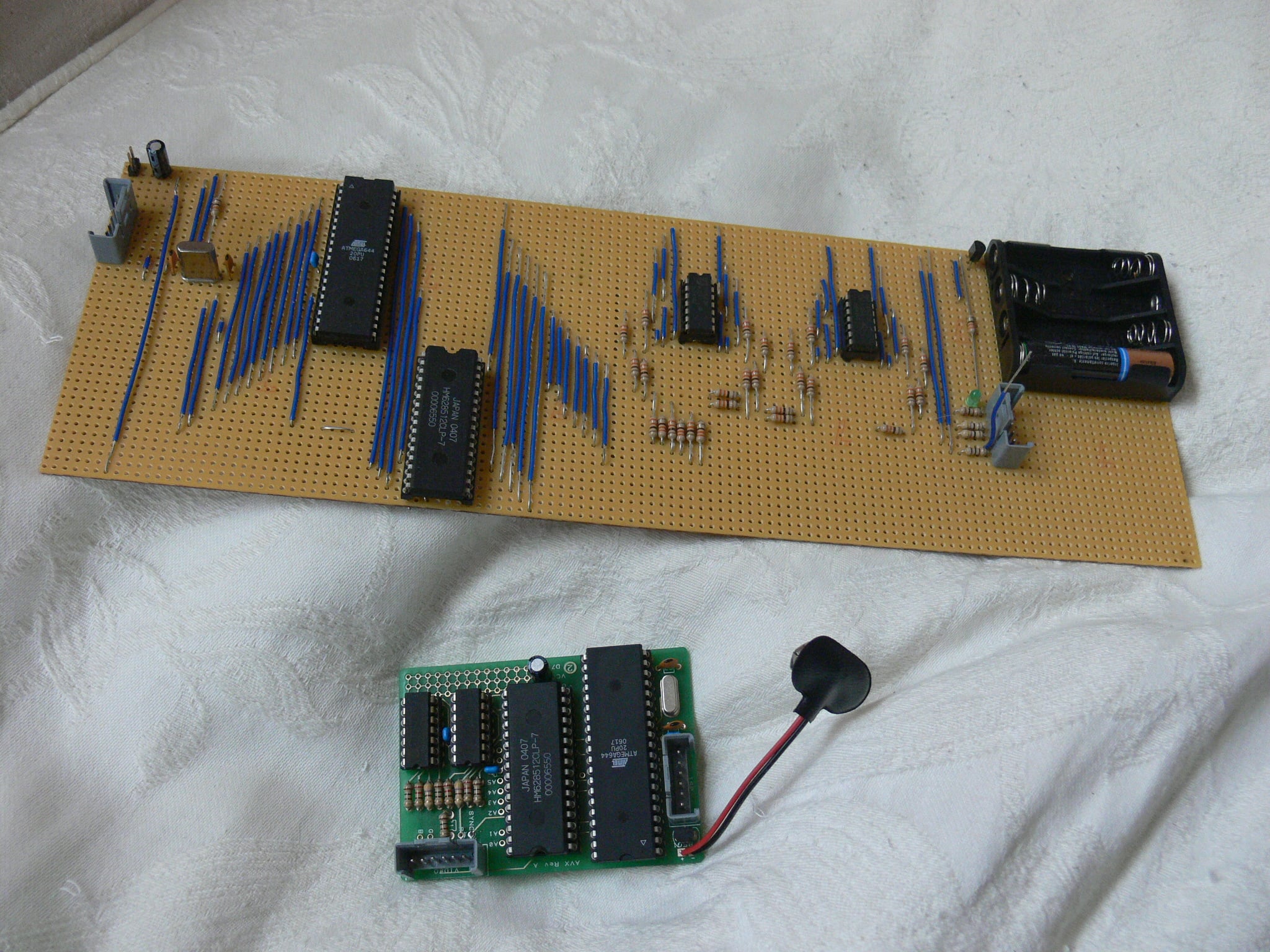
Atmel ATmega644 microcontroller
In 2006, the first concepts that would later become the Raspberry Pi were developed around the Atmel ATmega644 microcontroller (specifically the ATmega644-20PU, an 8-bit AVR microcontroller). This early design was not yet a Linux computer, but rather a small educational electronics platform intended to encourage children and students to learn programming and hardware design.
The prototype used a simple AVR microcontroller architecture instead of the ARM processors used in modern Raspberry Pi boards. The idea was inspired by classic educational computers such as the BBC Micro, which had been used in UK schools in the 1980s. The goal was to create an affordable computer that would allow young people to experiment with programming, electronics, and computer science.
However, the ATmega644 version had limitations. It did not have enough processing power to run a modern operating system, display high-resolution graphics, or provide a full desktop computing experience. The development team later moved toward more powerful ARM-based processors, which were becoming cheaper and more capable due to the growth of the smartphone industry.
The Atmel ATmega644-20PU contains:
- 64 KB Flash (program memory)
- 4 KB SRAM (internal data memory)
- 2 KB EEPROM
Hitachi HM628512CLP-7 SRAM External Memory Subsystem
To overcome the limited internal memory resources of the Atmel ATmega644-20PU microcontroller, the prototype incorporated an external high-speed static RAM device: the Hitachi HM628512CLP-7.
The HM628512CLP-7 SRAM was a significant component of the 2006 prototype. With 512 KB of external RAM, the system had a memory capacity closer to early 8-bit home computers than to a typical AVR development board. This suggests that the prototype was designed not only as a microcontroller experiment, but as an early attempt to build a small, accessible personal computer architecture.
The HM628512CLP-7 is a 4-Mbit asynchronous static RAM (SRAM) organized as 512K words × 8 bits, providing a total storage capacity of 512 KB. This external memory greatly expanded the available addressable workspace compared with the ATmega644's integrated 4 KB SRAM, enabling the prototype to handle larger programs, data structures, and experimental computing tasks.
The memory device was manufactured using Hitachi's Hi-CMOS (High-performance CMOS) process technology, combining low power consumption with fast access performance. The "-7" speed grade indicates an access time of approximately 70 ns, allowing relatively fast read and write operations for an embedded computing platform of that era.
Next steps
After testing early microcontroller-based designs, the development team concluded that a more powerful processor was necessary. The project shifted from simple AVR-based electronics toward a complete computer architecture capable of running Linux.
In the following years, the project evolved into the creation of the Raspberry Pi Foundation in 2009.
Around 2011, the project moved to ARM-based processors. ARM technology provided significantly higher performance and better multimedia capabilities while maintaining low power consumption.
After several ARM-based prototypes, the first commercial Raspberry Pi computer was released in 2012, introducing an inexpensive Linux-based computer that became popular in education, electronics, robotics, and hobbyist communities worldwide.
The team selected a Broadcom system-on-chip (SoC) solution based on the ARM architecture.